It's every pet parent's worst nightmare. You look away for a split second, a door is left slightly ajar, or a sudden thunderstorm panics your pet—and they're gone. Your heart sinks. You instantly think about printed flyers, checking local shelters, and posting frantically on social media.
While collars and ID tags are your pet's first line of defense, they can easily snap, slip off, or become unreadable over time. That is where microchipping comes in.
Consider a microchip as an invisible, permanent safety net that your pet can never lose. Let's break down exactly how this tiny piece of technology works, debunk the biggest myths, and walk through the simple steps to secure your pet's safety.
What Exactly is a Pet Microchip?
A pet microchip is a tiny electronic transponder encased in a biocompatible glass cylinder. To put its scale into perspective, it is roughly the size of a single grain of rice.
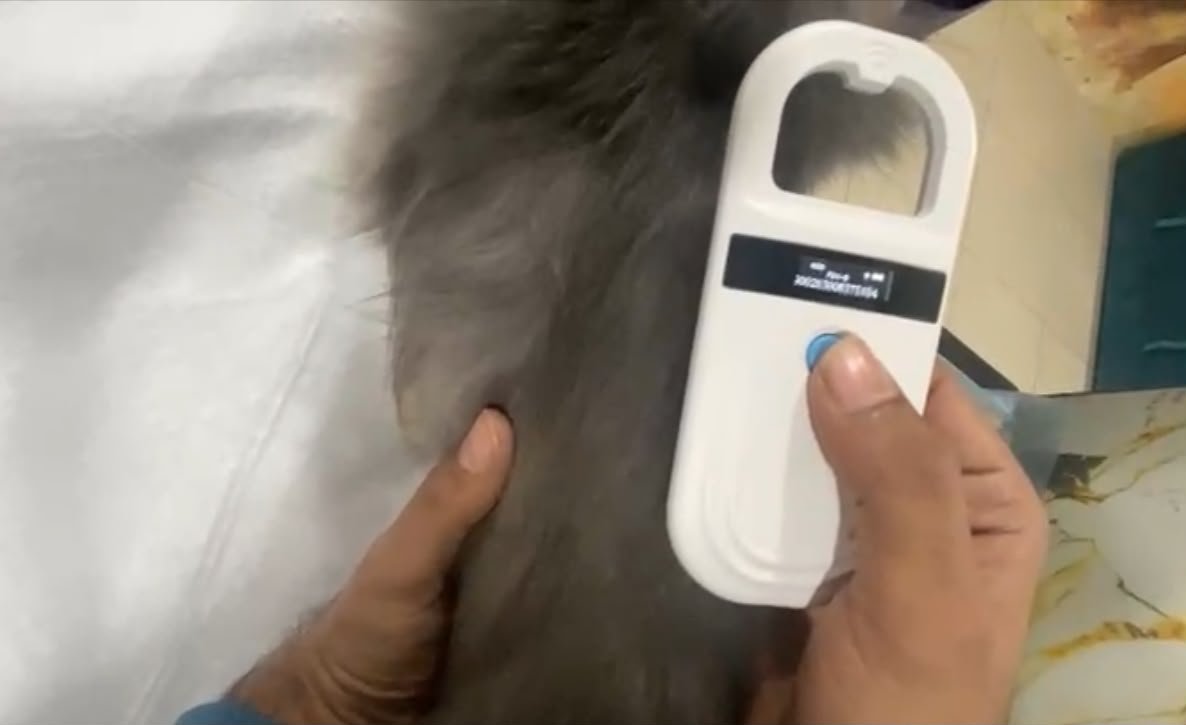
It is completely passive, meaning it has no battery and requires no power source. Instead, it uses RFID (Radio-Frequency Identification) technology. When a handheld microchip scanner is passed over your pet, the radio waves from the scanner activate the chip, which then transmits a unique identification number back to the scanner's screen.
Crucial Note: A microchip is not a GPS tracker. It cannot track your pet's real-time location if they run away. It only works if someone finds your pet and scans them at a shelter or veterinary clinic.
How It Works: The Reunification Process
If a lost pet is found and brought to a shelter or clinic, the staff will immediately use a universal scanner to check for a chip. Here is how that simple number translates to a happy reunion:
- 1. The Scan: The vet or shelter worker runs a scanner over the pet's shoulder blades. The scanner reads the unique 9, 10, or 15-digit ID number.
- 2. The Database Look-up: The worker inputs this ID number into a tool to determine which registry the chip is associated with.
- 3. The Contact: The worker contacts the registry company, who then looks up your contact details in their database and alerts you that your pet has been found!
How effective is this process? According to a landmark study published by the American Veterinary Medical Association (AVMA), microchipped dogs are returned to their owners at more than double the rate of unchipped dogs, and chipped cats are returned at a rate more than twenty times higher than those without chips.
Myth vs. Fact: Debunking Common Microchip Worries
Many pet owners hesitate to microchip because of common misconceptions floating around the internet. Let's clear the air:
- Myth: The implantation process is highly painful.
Fact: Getting a microchip is incredibly quick—essentially the same as getting a routine vaccination. The chip is injected under the loose skin between your pet's shoulder blades using a hypodermic needle. No anesthesia is required, though many vets will gladly do it while your pet is already asleep for their routine spay or neuter.
- Myth: It acts as a GPS tracker to find my dog on an app.
Fact: Standard microchips do not have GPS capabilities because they don't have batteries. If you want live tracking, you will need a separate GPS collar attachment.
- Myth: It compromises my personal privacy.
Fact: The only information stored directly on the chip is that random ID number. It does not contain your name, address, or phone number. That private information is safely locked in the secure database of the microchip registry, which is only accessible to authorized personnel attempting to find a lost pet's family.
The Golden Rule: You MUST Register the Chip!
Here is the biggest pitfall in the entire process: A microchip is completely useless if you do not register it.
About 40% of microchipped pets that end up in shelters cannot be reunited with their owners simply because the chip was never registered, or the owner forgot to update their contact info after moving.
How to keep your pet protected:
- Register immediately: Ask your vet for the enrollment paperwork or register online the exact same day the chip is implanted.
- Update after you move: If you change phone numbers, email addresses, or move to a new home, updating your pet's microchip registry should be at the very top of your moving checklist!
- Check-the-Chip Day: Make it a habit to have your vet scan the chip during their annual physical exam just to verify it hasn't migrated and is still functioning perfectly.
For a tiny, one-time expense, microchipping gives you the ultimate peace of mind that no matter what happens, your pet always carries their way home with them.